


Ultimate CS2 Economy Guide: How Money Works in CS2

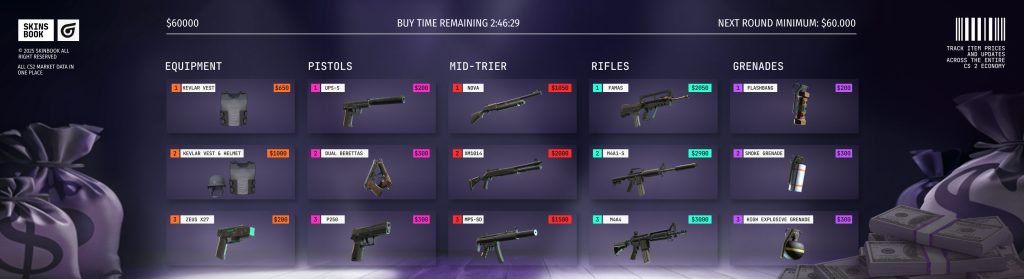
The economic system in Counter-Strike is one of the most essential parts of gaming. Obviously, players from both sides need to know the map and how to shoot the opponent. Still, they shouldn’t ignore correct money management. The reason is that it precisely boosts the win rate. But no worries. Our CS2 economy guide covers everything you need to know, including kill rewards, round income, loss bonus, buy patterns, and strategy. Without further ado, let’s explore our material right now with all the details and increase your chances of winning the next match!
How the CS2 Economy Works
The first thing you need to understand is that the CS2 (CS:GO) economy determines which weapons, armor, and utility players can buy. During each round, every player can earn some amount of CS2 money and spend it in the following rounds. And, indeed, you need to plan your expenses during them by using our CS2 economy guide.
Here is a simple math for a better understanding:
- Players earn money by killing an opponent.
- Each kill reward depends on weapon type.
- The win-loss record determines the team’s income.
All of these are mentioned, and even more, we will explore in detail below. For example, there are specific strategies for some rounds, but we rush things in today’s CS2 economy guide. Still, the main point is that you need to understand the importance of earning, saving, and spending correctly. You definitely shouldn’t spend everything you have after a series of losses or buy an AWP on an eco round (CS:GO) CS2. Also, not the best idea is to buy all utilities just to buy them, not to use them. Since it’s clear, let’s explore rewards and loss bonuses.
Earning Money Through Kills
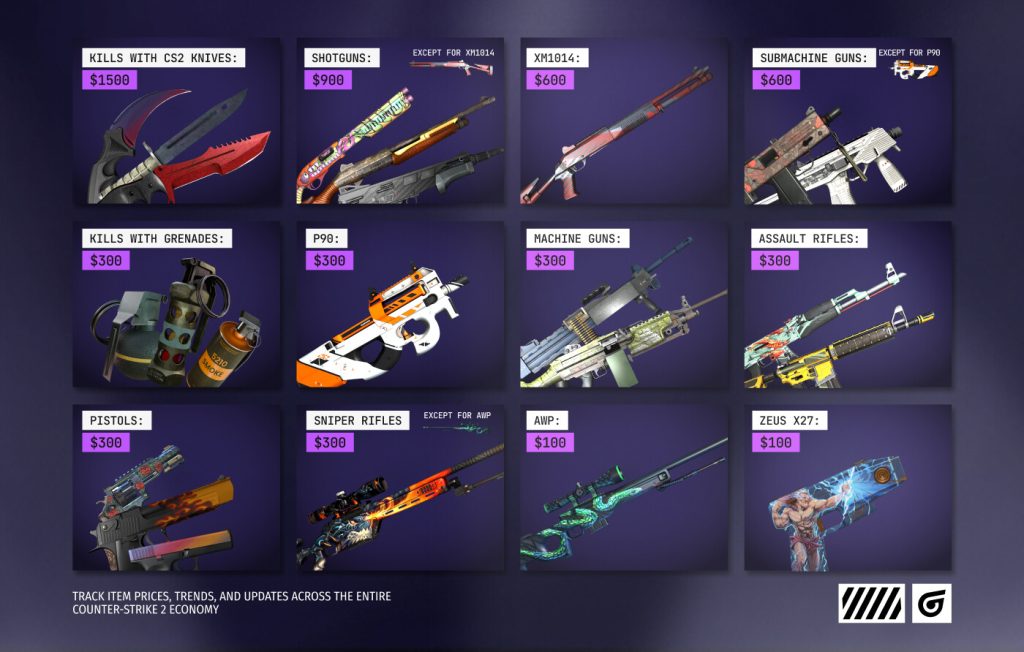
The basic income in the CS2 (CS:GO) economy is a kill reward. The amount of Counter-Strike: Global Offensive money the player can earn from it depends on the weapon type:
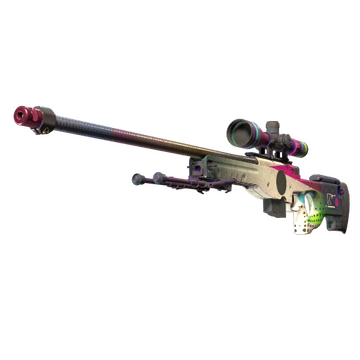
- $100 for killing with AWP or Zeus x27
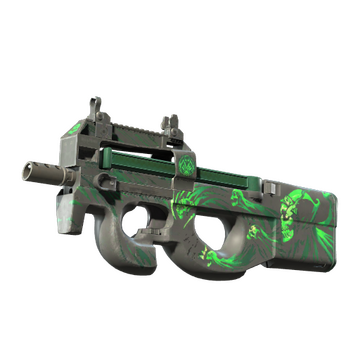
- $300 with Pistols, Rifles, and P90
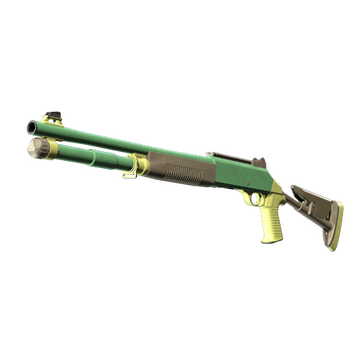
- $600 with SMGs and XM1014
- $900 with Shotguns
- $1,500 with a Knife
- 50$ additional reward for CT’s side for each dead Terrorist from the last round, including the bomb explosion.
- A random reward (equal to the opponent’s weapon) is sent to a random player if one of the opponents made suicide or disconnects mid-round.
Obviously, the best way to earn CS2 money and have an advantage over the opponent is by using SMGs or Shotguns in early rounds. The kill with a Knife is the best you can make to overtake the enemy significantly.
Earning Money at Round End
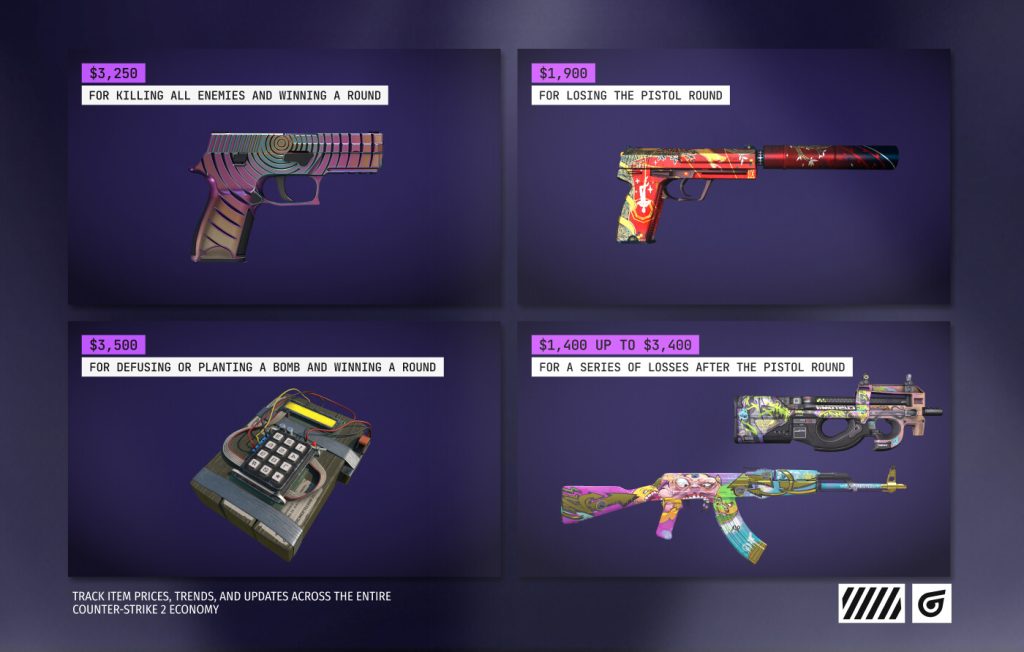
Needless to say, there is a mathematical logic behind earning Counter-Strike: Global Offensive money at the end of each round, too. Depending on the round results, players can play with more utilities and get full armor or have fewer opportunities. That’s how CS2 (CS:GO) economy looks:
- $3,250 for killing all enemies and winning a round.
- $3,500 for defusing or planting a bomb and winning a round.
- $1,900 for losing the Pistol Round.
- $1,400 up to $3,400 for a series of losses after the Pistol Round.
Bomb Plant Rewards
The CS2 (CS:GO) economy also includes bomb plant rewards. For example, there is an income for a player who defused or planted a bomb ($300). Also, a T’s side gets an $800 bonus if they lose but planted a bomb. Thanks to this extra Counter-Strike: Global Offensive money, Terrorists can force-buy earlier. If there is a bomb explosion with dead Terrorists, A T’s side gets a $3500 reward.
Understanding Loss Bonus & Economy Cycles
CS2 (CS:GO) economy includes loss-streak bonuses. $1400 for the first loss after the Pistol Round. The income increases with each subsequent loss, with $500 up to $3400 if it’s a series of losses. As soon as the team wins a round, the losing streak ends.
CT’s side often must double-eco on first rounds. It can help them to afford rifles and full utility in the third round. The same strategy also comes to T’s side if they lose the pistol round. As a result, with a guaranteed income from a planting bomb, they can afford rifles too.
CS2 Kill Rewards by Weapon Type
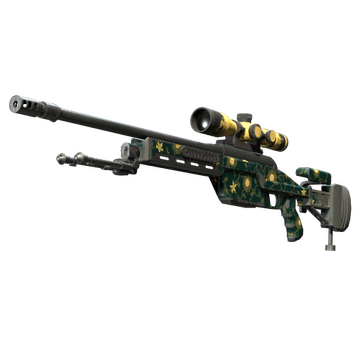
As we mentioned earlier in our CS2 economy guide, each reward has its own tier. The best one, which is $900 per kill, players can earn with a Shotgun (except XM1014 ). Still, since this weapon type is better for close-range combat, the golden mid is SMGs (except the P90 ), with a $600 kill reward. Moreover, players on both sides can use them as strong anti-eco weapons due to their low cost but high potential against Pistols. If you are looking for the best cheap long-range weapon, then choose Scout (SSG 08 ) with its $300 kill reward against AWP’s $100 kill reward.
Understanding Your Team’s Money
The most critical detail in CS2 (CS:GO) economy is understanding your team’s money. As you can already notice in our CS2 economy guide, the main goal for both teams is to reach the Full Buy threshold. In other words, players can buy a rifle, full ammo, and utilities. At the same time, the conditions may be imperfect. That’s why it’s crucial to communicate and avoid situations in which one player has a rifle, and the other can afford only a pistol.
In these situations, players should decide to go Force Buy or even an eco round in (CS:GO) CS2. Also, remember that your money is the team’s money and vice versa. If you have a better situation with Counter-Strike: Global Offensive money, buy a weapon for your teammate. It’s not about sharing, but working together to win.
How to Track Money in CS2
Players can track CS2 money during the buy phase. They are displayed above users’ names on the HUD. Another way to check your team’s budget is to look at the scoreboard. With that in mind, checking buy potential prevents mismatched buys. If you see that many of your teammates have low cash, you definitely need to go eco round in (CS:GO) CS2.
Team Economy vs Individual Decisions
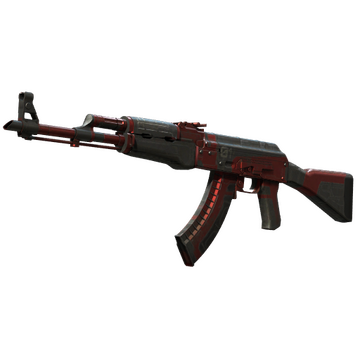
Your team CS2 (CS:GO) economy always overrides individual wealth. The secret of success lies in buying and saving as a unit, because even a single player can weaken your squad. Drop your AK-47 or M4A1-S to the teammate who lacks Counter-Strike: Global Offensive money to balance firepower. Such a strategy is especially vital for AWPers since buying this sniper rifle requires more money.
CS2 Buying Basics: What to Buy and When
Effective purchases in CS2 are determined by strong prioritization and economic status. What you buy should maximize your impact while following the team’s overall strategy.
Pistol Round Buys
As you can already notice from our CS2 economy guide, Pistol Round is the most crucial round for an entire match. It shapes the early CS2 economy and determines your chances of winning. During this round, both teams can buy armor (Kevlar vest), utilities, and upgraded pistols. The most popular strategy for T’s side is to purchase full utilities, while for CT’s side is to get armor. Additionally, two CTs may buy kits.
T-Side Buy Patterns
The standard full-buy for T’s side means buying an AK-47, full armor, and full utilities. The last ones are crucial for success. For example, smokes can help you to block sightlines, flashes can blind defenders to make an easy kill, and molotovs can clear corners.
A Force Buy Round can be used after a loss round, which is a risky strategy, but if successful, it can reset the opponent’s income. Additionally, Terrorists have a bomb-plant economy benefit, which allows them to have a backup plan even during a loss.
CT-Side Buy Patterns
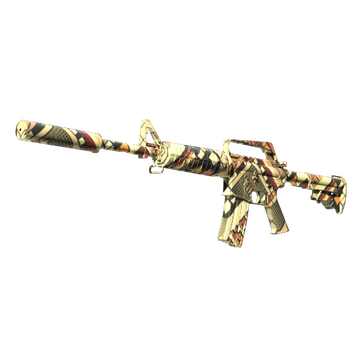
Obviously, the CT’s side faces a higher cost for Full Buy Rounds. The reason lies in the prices of M4-series rifles, a defuse kit, and an incendiary grenade. As a result, a standard full-buy loadout, which includes the rifle, full armor, the kit, and full utility, costs a lot. That’s why the team needs to check their economy and communicate for going Half Buy or Eco rounds in (CS:GO) CS2.
Core CS2 Economy Strategies
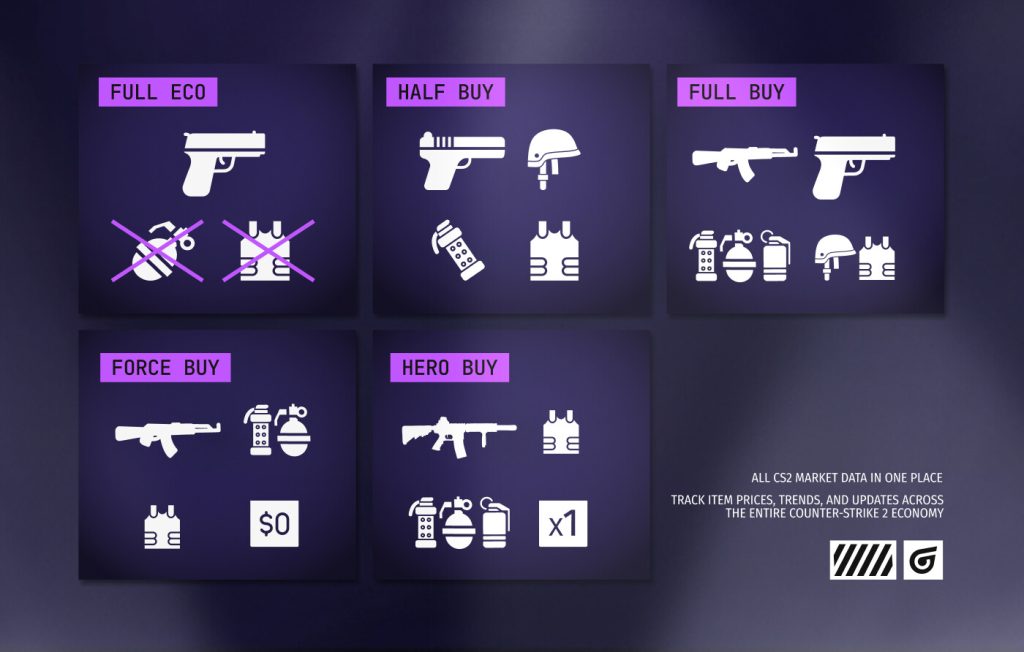
The CS2 (CS:GO) economy dictates the result of a match. Even though it’s built on the loss bonus (up to $3,400), winning requires syncing purchases to maximize team strength each round. And finally, our CS2 economy guide leads to all the economy strategies we explore below.
Full Buy Rounds
Full Buy Rounds mean that players in your team have enough Counter-Strike: Global Offensive money to buy everything they need. Moreover, no matter the round’s results, you still have funds to be effective after that. In other words, your team buys full rifles, armor, and full utility.
Force Buy Rounds
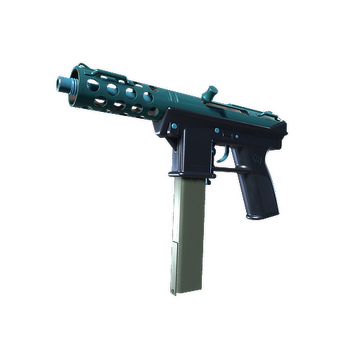
Force Buy Rounds are risky and meant to put everything on one bet. Usually, your team needs to go this way after losing a pistol or after losing rounds. So, if you don’t have enough CS2 money, buy the best weapon you can. For example, Tec-9 , Deagle, Scout, or MAC-10 .
But why is it risky? In short, if your team loses, you will be forced to eco round in (CS:GO) CS2.
Half Buy / Semi-Buy Rounds
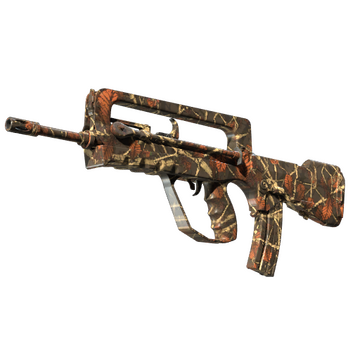
Half Buy Rounds exist to save CS2 money and play the Full Buy Round next. In that situation, CTs buy the FAMAS , and Ts buy the Galil AR . Also, some players prefer to make headshots with the Desert Eagle , which also may make sense for such rounds.
Eco / Full Save Rounds
Eco round in (CS:GO) CS2 is the round when only your skills and luck can help your team to win. The reason is that your teammates don’t have enough funds to buy full ammo and a rifle. On the other hand, if you make a kill during such a round, it’s better to get an opponent’s weapon and save it for the next round.
Anti-Eco / Farming Rounds
The most strategic round in our CS2 economy guide is the Anti-Eco Round. Your team may decide to do it after the win on Pistol Round because the opponents may do an eco round in (CS:GO) CS2. Use SMGs and Shotguns to farm high kill rewards.
Hero Buy
Hero Buy strategy strongly relies on knowing your teammates and their skills. In short, one player goes for Full Buy, while the other part of the team goes for an eco round or Force Buy in (CS:GO) CS2.
Practical CS2 Economy Tips
The last detail we should share with you in our CS2 economy guide is tips. And the first thing you need to do to master the CS2 economy is always to sync your buys with your team. A mismatch of gear could be worse than a full eco. Also, prioritize surviving and saving a weapon for the next round, especially if you steal it from the opponent during an Eco or Half Buy round.
Share weapons with a teammate who cannot afford to buy an AK-47 or an AWP. Also, don’t overbuy utility, as it can compromise the main rifle purchase. Try to predict the opponent’s economy to run Anti-Eco or Force Buy rounds. On top of that is playing for a bomb plant when needed. Lastly, avoid wasting CS2 funds on Eco rounds.
CS2 Economy Guide – Conclusion
As you can see in our CS2 economy guide, the game economy is built on team communication and the loss bonus system. Mastering it requires strategic saving and coordinated full buys. As a result, each player can afford their main rifle and utility. By prioritizing the team’s money over individual wealth and executing disciplined buying habits, you directly increase your firepower. In the end, a good economy always equals more wins.


Be the first to share your thoughts.