Karambit Blue Gem: A Complete Guide to Case Hardened Karambit Patterns

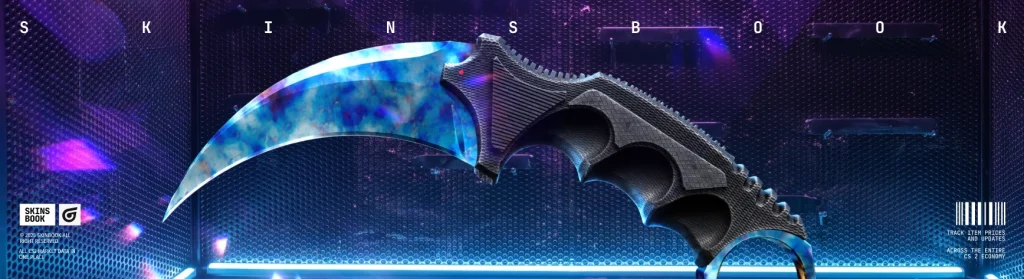
Ask any collector to name the most iconic knife in Counter-Strike 2, and you will hear one answer: the Karambit Blue Gem. The Karambit Blue Gem CS2 players dream about sits at the top of the rare-skin food chain, yet it is not a separate finish at all — it is a Case Hardened Karambit that rolled an exceptional pattern seed. Every seed between 0 and 999 paints the blade differently; a handful produce almost solid blue, and those are worth serious money. Pattern #387 is the famous benchmark. In this karambit blue gem guide, we cover how seeds work, the complete tier list, the best patterns, prices, rarity, identification, and safe buying.
What Is a Karambit Blue Gem?
The term sounds official, but Valve has never printed it anywhere — a Blue Gem is community shorthand.
Understanding the Case Hardened Finish
Case Hardened mimics a real heat-treating process: the blade comes out mottled with blue, gold and yellow, purple, and silver-gray patches. The finish pulls from a fixed texture map, and the pattern seed decides which slice lands on your knife, so two Case Hardened Karambits can look like entirely different skins. That is why a blue gem case hardened Karambit is still “just” a Case Hardened on paper — Blue Gem never existed as an official finish, only as a label for the bluest outcomes. Our explainer on CS2 skin pattern mechanics covers the underlying system in detail.
What Makes a Case Hardened Karambit a Blue Gem?
A case-hardened Karambit blue gem earns the label through a high concentration of desirable blue on the blade. Raw percentage alone does not tell the story: collectors pay for clean, uninterrupted blue areas, and placement matters as much as coverage. A blue gem Karambit Case Hardened specimen with dominant playside coverage simply plays in another league, while an ordinary pattern has blue noise instead of blue presence. For a broader look at these labels across weapons, see our blue gem CS2 overview.
Playside vs Backside Blue Coverage
Every Karambit has two faces: the playside, which you see during gameplay, and the backside, which mostly faces away. Playside coverage normally drives demand because that is the view everyone gets in-game. Judging a case-hardened blue gem karambit purely by an overall blue percentage misleads you — a 70% number could hide a weak playside carrying a brilliant back.
How Karambit Case Hardened Pattern Seeds Work
Every karambit case hardened blue gem story begins with one number. The seed is not trivia — it is the entire classification system.
What Is a Karambit Case Hardened Pattern Index?
The pattern index — also called the paint seed or pattern seed — is an integer from 0 to 999 assigned when the skin is created. It fixes which part of the Case Hardened texture wraps the blade, so the same number always produces the same color placement. A #73 unboxed in 2014 and one unboxed yesterday share identical layouts, so any blue gem case hardened Karambit you inspect should match its reference photos exactly. Checking the exact seed is essential when identifying any karambit case hardened blue gem: listings that only say “lots of blue” tell you nothing a pattern number would.
Pattern Index vs Float Value
These two numbers do different jobs. The pattern determines color placement; the float determines wear, sliding between 0.00 and 1.00 across Factory New, Minimal Wear, Field-Tested, Well-Worn, and Battle-Scarred. Float never changes one pattern into another — a worn case hardened karambit blue gem keeps its colors, and a blue gem Karambit Case Hardened knife in Field-Tested can outshine a Factory New ordinary seed. Our CS2 (CS:GO) float guide explains wear ranges in depth.
How Karambit Blue Gem Tiers Are Determined
Blue Gem tiers are community classifications, not official Valve categories, and specialist sources build them from a shared set of factors:
- Playside blue coverage.
- Position of blue on the blade.
- Amount of uninterrupted blue.
- Gold and yellow interruptions.
- Overall visual appearance.
Each analyst weighs these differently, so tier assignments vary slightly between specialist sources.
Complete Karambit Blue Gem Pattern Tier List
This reference table gathers every recognized karambit case hardened blue gem seed from highest tier to lowest, based on the community classification most specialist catalogs share — individual descriptions come in the next section. The CS2 (CS:GO) karambit blue gem seeds below total 157 out of 1,000 possible patterns; counts shift slightly between sources at the Tier 4 boundary.
| Tier | Pattern Seeds | Blue Coverage | Collector Demand |
|---|---|---|---|
| God Tier / S Tier | 387 | Exceptional | Exceptional |
| Tier 1 | 442, 269, 321, 73, 955, 853, 902, 507, 776 | Very High | Very High |
| Tier 2 | 905, 698, 670, 130, 375, 664, 828, 74, 282, 453, 868, 377, 891, 798, 341, 541, 713, 661, 494, 4, 182, 823, 273, 838, 917, 82, 721, 510, 809, 470, 179 | High | High |
| Tier 3 | 262, 322, 30, 256, 139, 782, 989, 888, 11, 844, 92, 919, 112, 770, 330, 463, 306, 34, 429, 965, 811, 522, 803, 20, 575, 638, 914, 580, 236, 310, 916, 515, 631, 407, 371, 841, 555, 711, 632, 398, 598, 420, 283, 856, 202 | Moderate–High | Moderate–High |
| Tier 4 | 25, 38, 335, 694, 424, 852, 849, 152, 727, 468, 106, 265, 194, 961, 138, 708, 942, 323, 325, 652, 749, 622, 334, 187, 974, 615, 405, 499, 432, 450, 643, 800, 381, 509, 426, 244, 935, 793, 913, 185, 945, 116, 434, 695, 151, 32, 177, 103, 588, 797, 401, 879, 839, 28, 497, 690, 363, 689, 875, 278, 775, 418, 259, 284, 595, 490, 286, 928, 985, 655, 953, 791 | Moderate / Mixed | Moderate |
Best Karambit Blue Gem Patterns
Out of 157 recognized seeds, five deserve a closer look — three define the top of the market, and two dominate the value conversation in their own tiers. Here is why each of these karambit blue gem patterns stands above its peers.
Karambit Case Hardened #387 — the God Tier
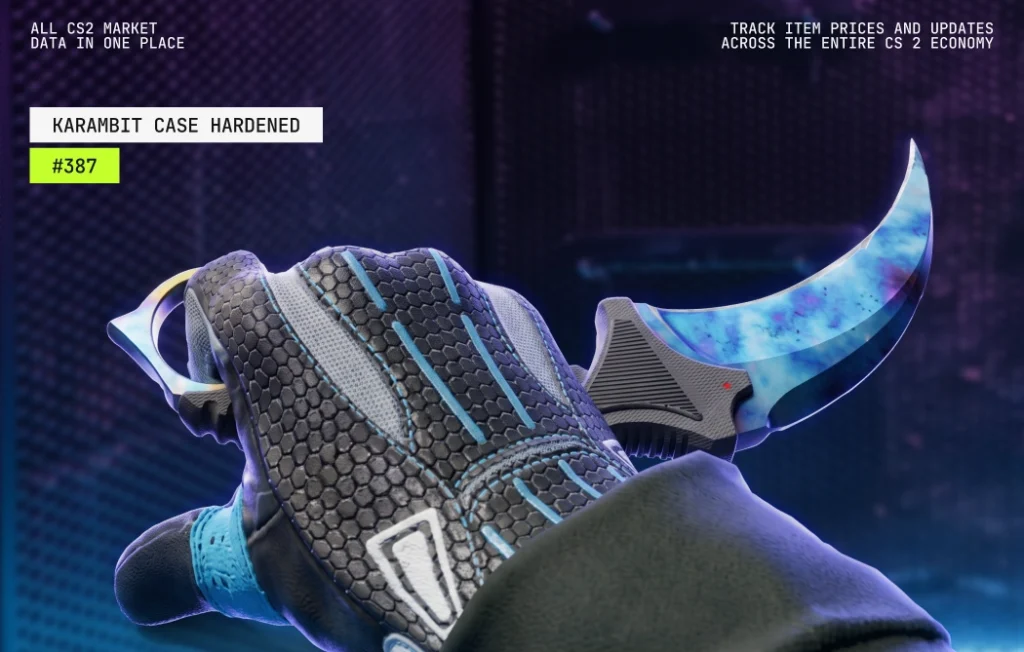
The karambit blue gem pattern 387 needs no hype: its playside is almost entirely blue, the cleanest full-coverage layout the finish can produce. Collectors treat the karambit blue gem pattern 387 as the benchmark against which every other seed gets measured, and only one Factory New example is known to exist. If someone asks you to name the best karambit blue gem pattern ever rolled, this is the only correct answer — nothing else comes close.
Karambit Case Hardened #73 — Tier 1 classic
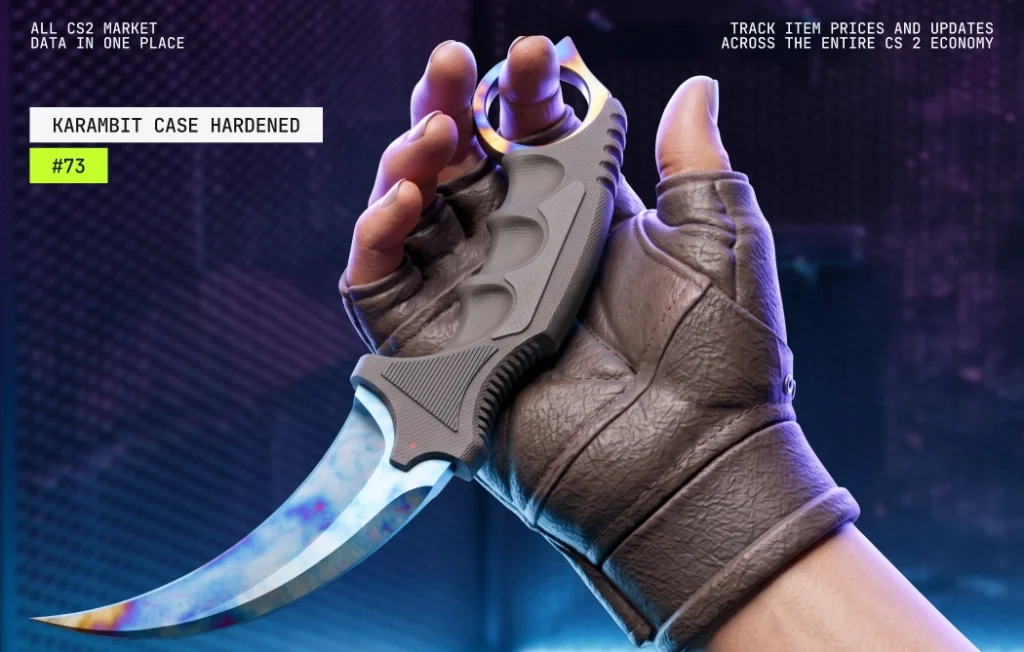
Seed #73 belongs to the small karambit case hardened blue gem Tier 1 family, showing very high playside blue with minimal gold interruption. It trades at a fraction of the #387 valuation, making it the realistic answer when buyers ask about the best karambit blue gem pattern they could actually own.
Karambit Case Hardened #507 — Tier 1 contender
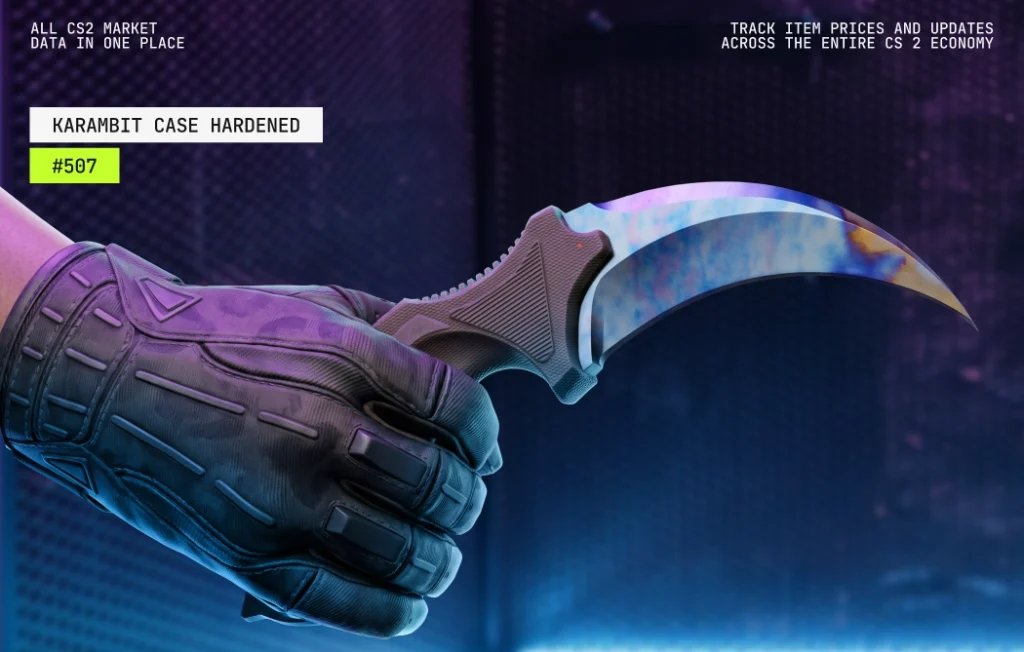
Another Tier 1 staple, #507 offers the same very high coverage profile that defines the group, and this case hardened blue gem karambit shows up in sales discussions regularly, so price discovery beats rarer seeds — a practical pick for anyone chasing the best karambit blue gem pattern below God Tier.
Karambit Case Hardened #30 — Tier 3 value king
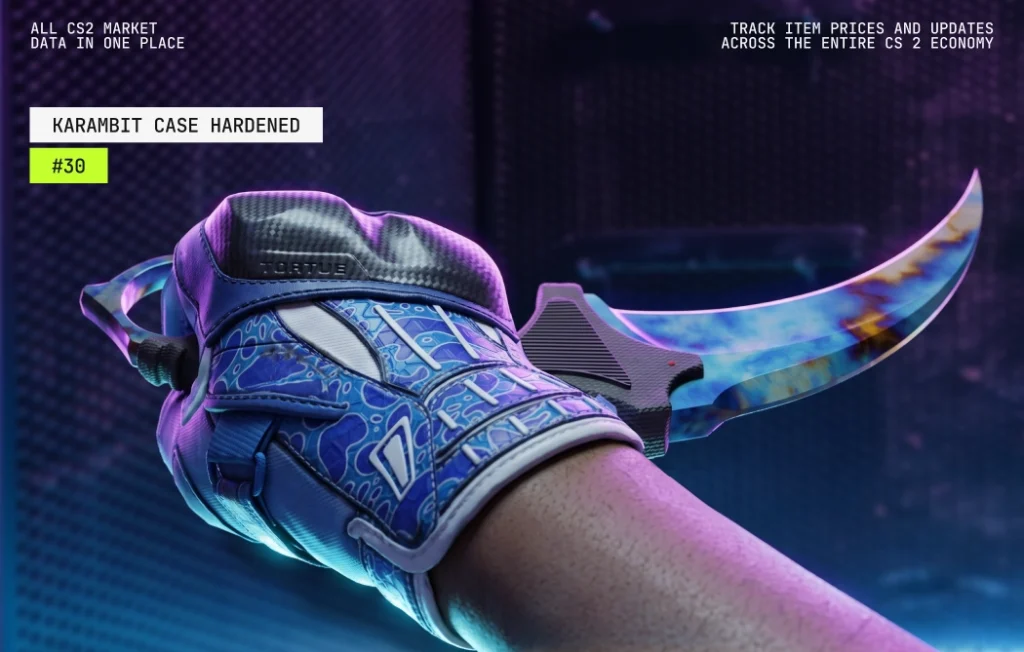
The honest context: #30 sits in Tier 3, not Tier 1, yet it earns its spot here because pattern-tracking tools such as the CS2 community database record roughly 76% playside blue for it — outstanding for its tier, and arguably the best karambit blue gem pattern in the mid-range: most of the look, a small part of the bill.
Karambit Case Hardened #961 — Tier 4 entry ticket.
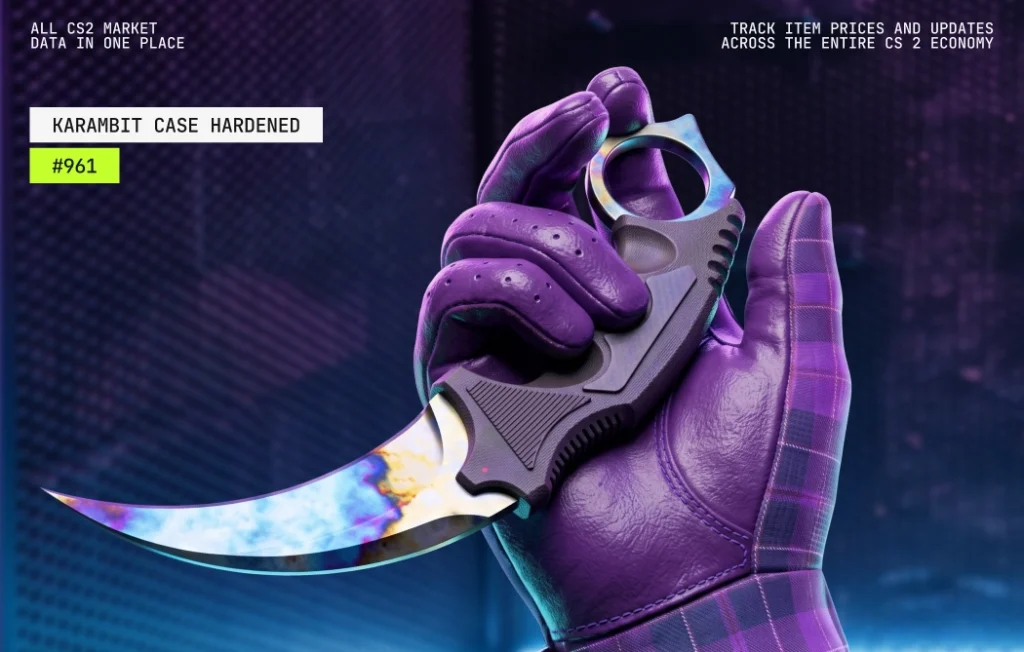
Seed #961 lands in Tier 4, the entry-level band of recognized Blue Gems. Coverage is modest and mixed compared with the heavyweights, but it still carries the label, still reads blue in game, and costs a fraction of what a Tier 1 case hardened karambit blue gem commands — the first step into karambit blue gem patterns for budget collectors.
Karambit Blue Gem Price Guide
No universal karambit blue gem price exists. The karambit blue gem price depends on the exact seed far more than on owning a Case Hardened Karambit with some blue areas, and the karambit blue gem price gap between two similar-looking knives can reach five figures.
Karambit Blue Gem Prices by Tier
| Pattern Tier | Price Level | Availability | Collector Demand |
|---|---|---|---|
| #387 / God Tier | Specialist valuation | Extremely Rare | Exceptional |
| Tier 1 | Very High | Very Limited | Very High |
| Tier 2 | High | Limited | High |
| Tier 3 | Moderate–High | Moderate | Moderate–High |
| Tier 4 | Variable | Higher | Moderate |
Reference points, as of September 2026: an ordinary Case Hardened Karambit with no notable seed runs 900.00–900.00–1,500.00 depending on wear; blue gem karambit price territory for Tier 4 seeds starts near $1,000.00; Tier 1 sits anywhere from $30,000.00 to $100,000.00 and up. Treat every karambit blue gem price on a forum as an asking price until a deal closes.
Blue Gem Karambit 387 Cost
The blue gem karambit 387 cost question breaks conventional valuation, because only one Factory New example of the karambit blue gem pattern 387 is known. In September 2021, the owner — a Chinese collector known as 青い王 (“Blue King”), also called Newb Rage — rejected an offer of 1.2 million euros in Bitcoin, roughly $1.4 million at the time. Separately, a Well-Worn #387 sold in June 2023 for $118,000.00, the most documented public transaction involving this seed.
Current estimates for the Factory New example sit between $1.5 million and $2 million, so the blue gem karambit 387 cost debate stays speculative and the blue gem karambit 387 cost record remains an offer, not a transaction. Keep the evidence layers straight: asking price, estimate, offer, rejected offer, and confirmed sale are five different things. No verified multimillion-dollar sale exists, so any blue gem karambit 387 cost figure quoted is an estimate, not a receipt — serious blue gem karambit 387 cost analysis starts with exactly that distinction.
What Affects Karambit Blue Gem Prices?
Several levers move the final karambit blue gem price on any karambit case hardened blue gem:
- Pattern seed and its community tier.
- Playside appearance.
- Float value.
- Exterior condition.
- Corner condition on the blade’s edge.
- StatTrak status.
- Scarcity of that specific seed.
- Current collector demand.
- Recent comparable transactions.
With so many variables stacked, always compare CS2 (CS:GO) skin prices across venues and check live CS2 (CS:GO) skin prices before negotiating — stale numbers cost real money.
How Rare Are Karambit Blue Gems?
Rarity here stacks from several factors — the Case Hardened finish alone guarantees nothing.
Pattern Rarity and Supply
Only specific seeds produce recognized karambit blue gem patterns: roughly 150 to 175 of the 1,000 possible seeds earn the label depending on whose framework you follow, and a Tier 1 case hardened karambit blue gem comes from roughly 1% of all possibilities. The karambit blue gems collectors fight over get rarer still at the summit: only one Factory New karambit blue gem pattern 387 is known.
Remember the difference between seeds that exist and knives in circulation — limited marketplace availability does not prove only that many examples exist, since collectors hold plenty offline.
Can You Still Unbox a Karambit Blue Gem?
Technically, yes. The Karambit Case Hardened remains obtainable from eleven eligible cases: CS:GO Weapon Case, CS:GO Weapon Case 2, CS:GO Weapon Case 3, eSports 2013 Case, eSports 2013 Winter Case, eSports 2014 Summer Case, Operation Bravo Case, Operation Phoenix Weapon Case, Operation Vanguard Weapon Case, Winter Offensive Weapon Case, and Revolver Case.
The knife then still needs a qualifying seed, and community estimates put any knife drop at roughly one gold per 385 cases before pattern luck enters the picture. We will not quote exact Blue Gem odds — nobody can verify them — but “astronomical” understates the reality for any CS2 (CS:GO) karambit blue gem hunter.
How to Identify a Karambit Blue Gem
This is the practical part of our karambit blue gem guide, and every karambit blue gem CS2 buyer should work through it step by step.
Check the Pattern Index
Open the item’s inspect view in game or through a browser inspect link and read the exact pattern seed. The number never lies, while screenshots and listing titles often do. Every blue gem Karambit Case Hardened listing should show that number upfront — no seed means no deal.
Inspect the Blade
Look at the case hardened blue gem karambit’s playside first, in game if possible. Judge where the blue sits, how much of it runs uninterrupted, and how much gold breaks it up. Then flip to the backside and weigh it as a bonus, not the headline.
Check Float and Condition
Confirm the float and match it to the advertised wear tier, because condition shifts any blue gem karambit price sharply at this end of the market. Our CS2 (CS:GO) rarity explainer covers how rarity tiers and exterior grades interact.
Common Blue Gem Identification Mistakes
- Trusting an overall blue percentage instead of playside coverage.
- Buying by listing title or screenshots without reading the seed.
- Confusing a blue Doppler with a real case hardened karambit blue gem.
- Assuming a recognized seed in Battle-Scarred keeps its full premium.
- Assuming all karambit blue gem patterns cost the same.
How to Buy a Karambit Blue Gem Safely
Buying a karambit blue gem CS2 sellers advertise rewards preparation more than bravery, and this karambit blue gem guide keeps the process simple.
Choose the Right Pattern for Your Budget
Decide your tier first, then your seed — every blue gem case hardened Karambit fits one of the five rows above. Tier 3 and Tier 4 karambit blue gems deliver the look at human prices; Tier 1 demands serious capital; a God Tier case hardened karambit blue gem demands a private broker and a small fortune.
Compare Current Market Prices
Never anchor on a single karambit blue gem price. Cross-check several venues from our best CS2 markets list, run a realistic blue gem karambit price check against recent chatter, and remember that asking prices invite negotiation — especially on seeds with thin sales history.
Avoid Scams and Misleading Listings
Verify the pattern index and float through an inspect link before any money moves, ignore strangers who rush you into direct trades, and treat “cheap Tier 1” as a red flag by definition. Valve’s own Steam Support scam guidance covers the common hijack and impersonation tricks worth knowing.
Compare Karambit With Other CS2 Knives
Before committing, sanity-check your budget against other elite blades on our CS2 knife tier list — the same money buys top finishes on several excellent knives.
Karambit Blue Gem vs Other Rare Karambit Finishes
Not every rare blue knife qualifies as a CS2 (CS:GO) karambit blue gem, and mixing a karambit case hardened blue gem up with a lookalike costs buyers real money.
Karambit Blue Gem vs Doppler Sapphire
Both can show dominant blue, but the resemblance ends there. Sapphire belongs to the Doppler finish from the Chroma-era cases, with its own phase system and valuation logic, while a case hardened karambit blue gem refers specifically to desirable Case Hardened patterns — entirely different rarity rules.
Karambit Blue Gem vs Marble Fade
Marble Fade brings a different finish, a different color palette, and a different desirability game — its karambit marble fade patterns chase color-band placement like Fire & Ice, which works nothing like Case Hardened blue coverage.
Which Is More Valuable?
There is no universal answer. Exact pattern or phase, float, condition, rarity, and current demand all move the needle, and top examples of all three finishes reach five and six figures. Compare equivalent high-end pieces rather than entire finish families against each other — the specific item matters more than the label.
Is a Karambit Blue Gem Worth It?
For the right buyer, a blue gem case hardened Karambit is absolutely worth it. You get unmatched collector recognition, a unique pattern-driven look no two seeds share, and genuinely limited supply of desirable patterns — this karambit case hardened blue gem turns heads in every lobby it enters.
Every blue gem karambit price premium pays for aesthetics, rarity, and collector demand — zero gameplay benefit. Keep the caveats in sight: high-end karambit blue gems suffer limited liquidity when you eventually sell, market prices change, and collecting value is not the same as investment returns. Nobody can promise that the karambit blue gem price curve only points up. The strongest examples sell in days when priced right, while seven-figure pieces can wait years for the right collector.
Conclusion
On a blue gem case hardened Karambit, nothing else carries the same weight as the pattern index and the quality of the playside blue. Pattern #387 remains the benchmark, but tier, float, condition, StatTrak status, scarcity, and demand all shape what any individual knife is worth. Verify the exact seed, pull current market data, and only then talk numbers — that habit protects every karambit case hardened blue gem purchase, and karambit blue gems always reward verification.
And if a deal ever feels rushed, walk away — every blue gem karambit price is a negotiation, and patience beats pressure at this end of the market.
FAQ
The karambit blue gem pattern 387, full stop — the cleanest near-total playside blue the finish can produce, and only one Factory New example is known. Among ownable seeds, Tier 1 patterns like #73 and #507 come closest.
From roughly $1,000.00 for Tier 4 seeds to 30,000.00–30,000.00–100,000.00-plus for Tier 1, with the God Tier valued individually. Seed, float, condition, StatTrak, and demand set each karambit blue gem price, so treat every blue gem karambit price quote individually.
No confirmed public sale exists, so estimates rule: community valuations place the Factory New example between $1.5 million and $2 million, anchored by a rejected 1.2-million-euro offer from September 2021.
No official Valve count exists. Community frameworks label roughly 150 to 175 of the 1,000 seeds as recognized CS2 (CS:GO) karambit blue gem seeds, disagreeing mostly at the Tier 4 boundary.
No. Plenty of patterns show scattered blue patches without earning the label — a true case hardened karambit blue gem shows dominant, clean playside blue.
Never the pattern itself — float only controls wear on your blue gem Karambit Case Hardened knife. A Battle-Scarred #73 keeps its colors; heavy wear just dulls the blade on a case hardened blue gem karambit and cuts the price.
Playside, by a wide margin — that is the view you see in game. On any blue gem case hardened Karambit, a strong backside adds desirability but rarely rescues a weak playside.
Yes, in theory — eleven legacy cases still hold the knife, and any unbox can roll a qualifying seed. The combined odds are vanishingly small, so for the karambit blue gem CS2 dream, buying outright is saner.
CS:GO Weapon Case, CS:GO Weapon Case 2, CS:GO Weapon Case 3, eSports 2013 Case, eSports 2013 Winter Case, eSports 2014 Summer Case, Operation Bravo Case, Operation Phoenix Weapon Case, Operation Vanguard Weapon Case, Winter Offensive Weapon Case, and Revolver Case.
The karambit blue gem CS2 market offers three routes: buy directly on a marketplace, trade through private deals with collectors, or unbox legacy cases at lottery-level odds. For a specific seed, direct purchase is the only sane path.
Inspect the knife in game or through an inspect link, read the pattern index in the item details, then match that number against the tier table in this karambit blue gem guide.


Be the first to share your thoughts.