CS2 (CS:GO) Skin Pattern: How Rare CS2 Skin Patterns Work and How to Check Them

It’s no secret that skins in CS2 are more than just a name, a rarity tier, or a wear condition. In fact, two absolutely identical skins with the exact same Float can look completely different. The reason for this is the CS2 (CS:GO) skin pattern. It is the weapon pattern that determines exactly how the texture is applied: where the color hits, where the symmetry lands, or where you get clean spots versus total chaos.
To a casual player, this might seem like a minor detail. Still, for collectors and traders, the pattern often decides everything – from the visual wow factor to a price tag that can vary drastically. In this article, we’ll break down how CS2 (CS:GO) skin patterns work, why some are considered rare, and how to learn to distinguish the truly valuable options from the average ones.
What Is a CS2 (CS:GO) Skin Pattern
For those who haven’t dived deep into the skin market, or haven’t been playing long enough to know every mechanic in CS2, let’s explain. CS2 (CS:GO) skin pattern is a numerical identifier that determines exactly how a texture map is superimposed onto a weapon model. To make it easier to visualize, imagine a hydro-dip tank filled with different colored paints where you dip the weapon. Exactly how the skin gets painted this specific time is a mystery.
However, it’s not as complicated as it seems. In reality, there isn’t an infinite number of these painting options as you might expect, but exactly 1,000 variations. This means the same weapon can be painted in 1,000 different ways. The pattern is often referred to as the pattern index, skin pattern ID, or Paint Seed. This specific parameter dictates where you see more color, where spots appear, where the symmetry lies, or where the “clean” zones remain. Because of this, two skins with the same name, same float, and even the same wear condition can look totally different.
It is crucial not to confuse the pattern with float or wear. CS2 (CS:GO) Float is responsible for the degree of degradation (Factory New, Field-Tested, etc.), while the pattern affects only the placement and look of the texture. For example, in pattern-based skins, the exact same model might have more gold, more blue, or perfectly symmetrical elements, depending entirely on the pattern ID. That is why patterns play a key role in visual evaluation and the skin’s actual value.
How the CS2 Skin Pattern Works
We’ve touched on how this works, but let’s look a little deeper. When a skin is generated in CS2, the game doesn’t draw it from scratch. Valve uses a pre-made texture template that is applied to the weapon’s 3D model. Then, RNG (Random Number Generation) comes into play: the system selects a specific skin pattern ID, which determines the offset, rotation, and placement of this template on the model.
This is exactly why identical skins can look like entirely different items. On one, the color is evenly distributed; on another, it has slid onto the magazine or the stock; and sometimes, it creates an almost perfect symmetrical design. The skin pattern ID effectively tells the game: “show these key texture elements right here.”
It’s important to understand: the CS2 (CS:GO) skin pattern does not change with time and does not depend on game updates. If a skin drops with a certain pattern ID, it stays that way forever. This is why players, traders, and collectors take skin inspecting so seriously before buying: visuals are king.
What Are CS2 (CS:GO) Rare Patterns?
As you’ve already realized, even identical skins differ, and naturally, there are variations that players covet the most. A “CS2 (CS:GO) rare skin patterns” is not an official status from Valve, but rather a community valuation formed over the years. The game doesn’t explicitly say that one CS2 (CS:GO) skin pattern is better or worse, but players quickly noticed that some variations look significantly more impressive than others. These are the ones that began to be considered rare.
Usually, valuable patterns feature:
- Dominance of a desirable color or material (like Blue Gems).
- Visual symmetry.
- Clean placement of key elements (without a broken design).
- A minimum of empty or dirty zones.
A prime example is the Case Hardened series, where specific Pattern IDs result in an almost completely blue play-side, or Fade, where the fade percentage coverage is critical. At the same time, two skins with the same wear, CS2 rarity, and market price can look absolutely different, and it is the pattern that decides which one sells faster and for a higher premium.
An important note: rarity is often subjective. What one player calls top-tier, another might consider average. However, it is the community consensus that ultimately drives the market price.
CS2 (CS:GO) Weapon Pattern Types
To navigate this more easily, CS2 (CS:GO) all pattern skins are generally divided into three types.
Static Pattern
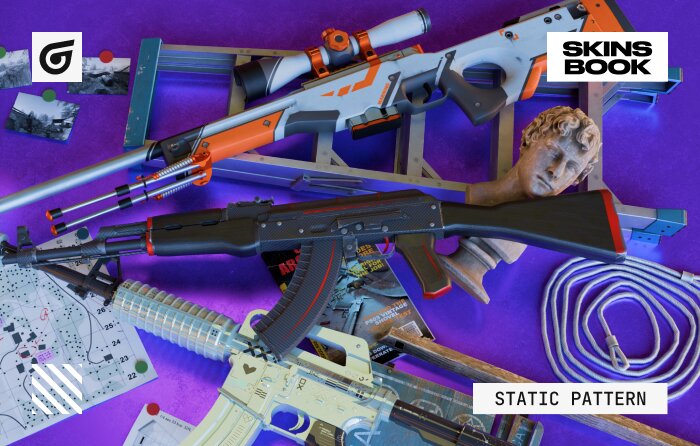
In these skins, the texture barely changes. The design always looks the same or has minimal deviations. The difference between the two items is barely noticeable, even if the CS2 (CS:GO) skin pattern is different. This is convenient for casual players, but generally uninteresting to collectors.
Semi-dynamic Pattern
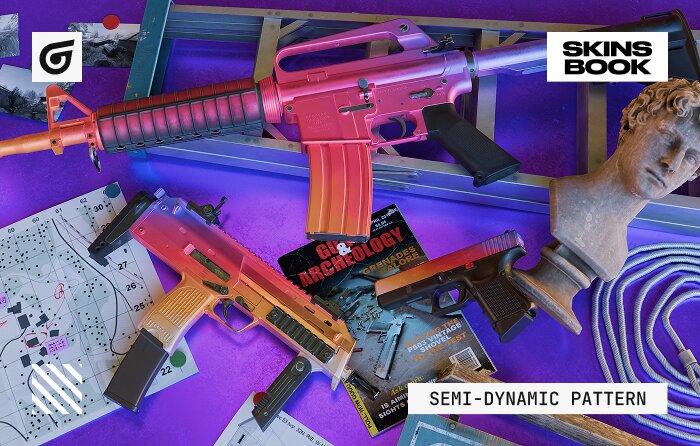
Here, variability starts to appear. The general style remains the same, but individual elements may shift or look slightly different. These skins often have “better” and “worse” patterns, but the difference between them isn’t usually critical to the price.
Dynamic Pattern
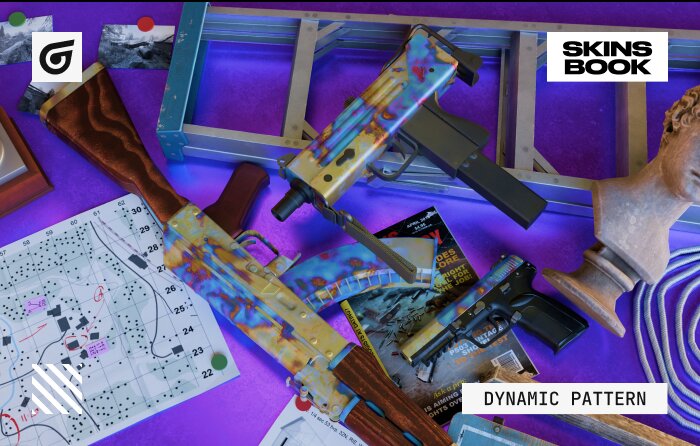
The most interesting category. This is where the Pattern ID can drastically change the look of the skin. One variant might be average, while another is nearly god-tier. This type includes Fade, Case Hardened, Doppler, Gamma Doppler, and other iconic CS2 (CS:GO) best skin patterns, where specific IDs can cost several times more than the market average.
Popular CS2 Skins With Valuable Patterns
In CS2 (CS:GO), there are several models, or perhaps more accurately, several skins, where the pattern genuinely impacts value and demand. In our CS2 (CS:GO) skin pattern guide, we have selected the most significant and recognizable ones that the community tracks most often, along with examples of rare variations you should know about.
Case Hardened Patterns
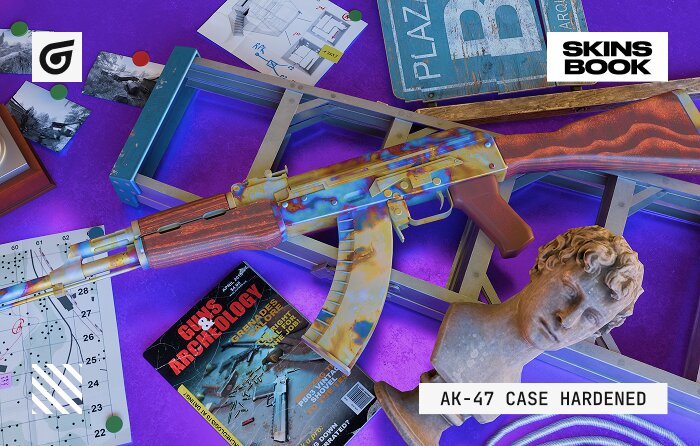
The Case Hardened is easily one of the most famous skins in CS2, and actually holds the record for the most expensive weapon skin ever sold. So, why is it so rare, and why do CS2 (CS:GO) pattern skins cost hundreds of thousands of dollars? It all comes down to the uniqueness of specific CS2 (CS:GO) rare skin patterns.
The skin replicates the look of metal undergoing the hardening process. Just as different colors appear on metal when it is being hardened, the same thing happens on this skin. Among these unique patterns, players look for the ones with the most blue. These CS2 (CS:GO) skins with rare patterns are called Blue Gems, and they are the ones that fetch thousands of dollars.
Fade Patterns
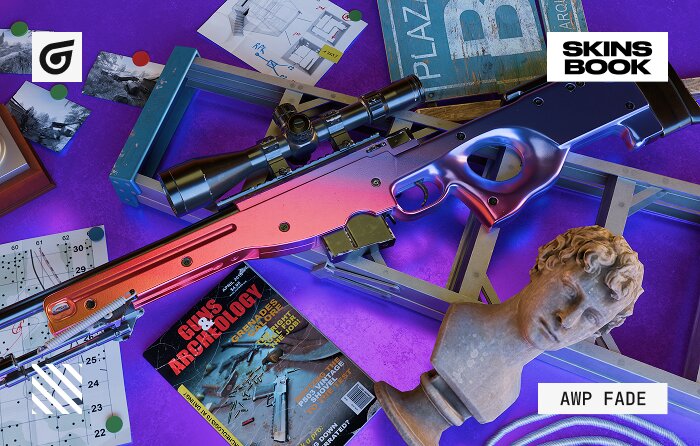
With Fade skins, the key factor is the “fade percentage” – the transition between gold, purple, and sometimes other shades. Here, different pattern IDs determine how the skin looks. A knife with a high fade percentage might look like it is fully covered in the gradient, while another ID might only cover part of the blade.
Because of this, the best skin patterns for Fade in CS2 (CS:GO) are significantly more expensive. A fuller color coverage has a huge visual impact and is in much higher demand.
Doppler and Gamma Doppler
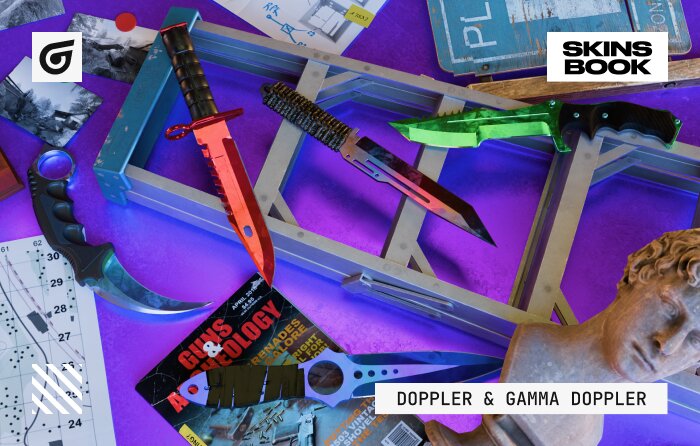
These patterns are divided into phases or variations, for example, Ruby (red), Sapphire (blue), or Emerald (bright green) in the case of Gamma Dopplers. The most expensive versions, usually Ruby and Sapphire, feature an almost solid, uniform color across the knife blade, which makes them highly desirable. This is another example of CS2 (CS:GO) rare skin patterns, where the specific color variation makes a massive difference in price.
Crimson Web Knife
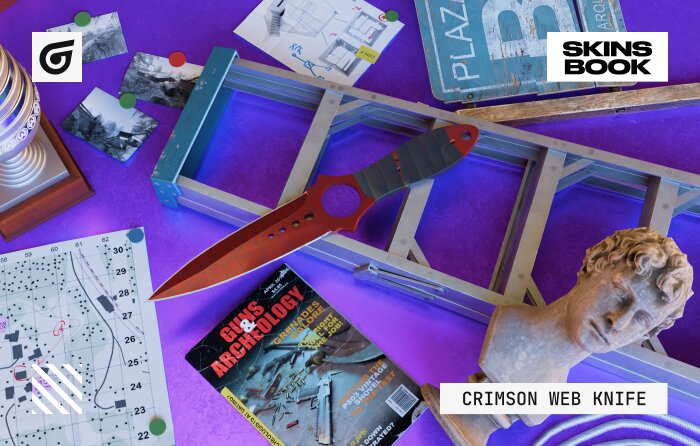
In the case of Crimson Web, it’s not the amount of webbing that matters, as many players might think, but rather where it is located. Patterns where a “web center” is clearly visible on the blade significantly boost the knife’s appeal and value compared to standard patterns. This effect is a prime example of CS2 (CS:GO) pattern skins, where even a simple design on the surface can drastically change how the weapon is perceived.
Slaughter Knife
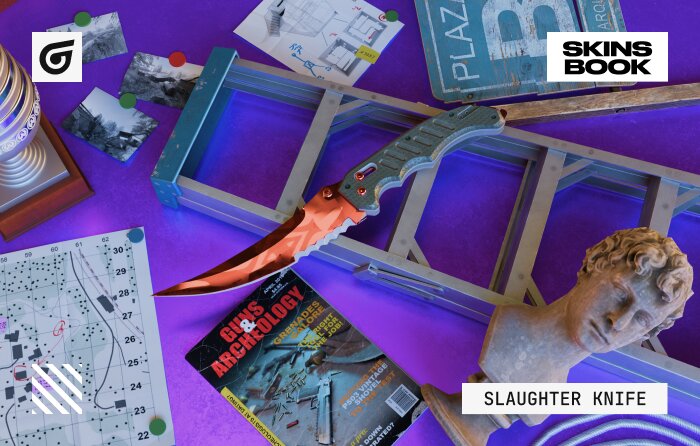
Honestly, Slaughter is an example of a pattern where official “rarity” doesn’t exist, but the community decided otherwise. The basic red-and-silver design almost always looks good, but specific texture layouts hold the real value. The most desirable ones are Heart, Diamond, Angel, and Phoenix, which appear thanks to the pattern’s lucky positioning at the center of the blade. There’s also a somewhat funny pattern called “Dogbone,” though it’s not as expensive as the others.
Technically, all these options are just CS2 (CS:GO) skins with different patterns, but visual symmetry makes them much more expensive. This is especially noticeable on knives, where the blade shape allows you to “read” the pattern at first glance. There is an important nuance here: the float value barely affects the visuals, so buyers often chase the pattern itself rather than the condition.
Kami Pattern
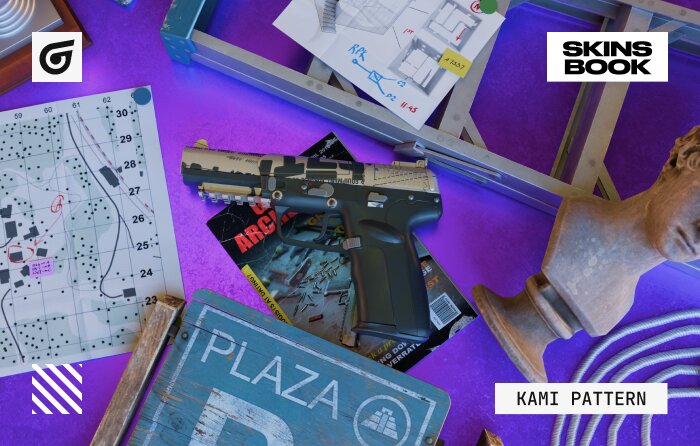
Kami is an example of CS2 (CS:GO) pattern skins, where all the magic lies in the details. Formally, all Kami skins look similar, but specific skin pattern IDs determine how clearly and fully the Japanese characters, inscriptions, and faces are visible on the body. The most valued variants are those with maximally clean and readable elements without cut-off fragments.
This pattern was never mainstream, but it sees steady demand among collectors precisely because of the uniqueness of each copy. Kami is a good example of how CS2 (CS:GO) skins with different patterns can have different values without any official rarity markers. It comes down entirely to visual perception and community knowledge.
Other Patterns
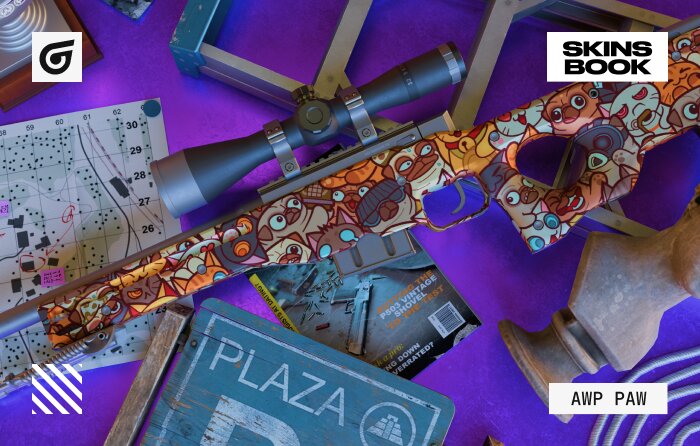
Besides the famous cases, there is a large group of CS2 (CS:GO) rare skin patterns that don’t have Valve-official names but are actively discussed in the community. These could be unusual dominant colors, symmetrical texture zones, or simply “lucky” layouts that look better than standard ones.
Such pattern skins CS2 rarely have a fixed price and depend heavily on demand right here and now. That’s exactly why they often become a trap for beginners: the same pattern might look like a “treasure” to some and just a regular skin to others. This is where experience, a sharp eye, and market understanding come into play.
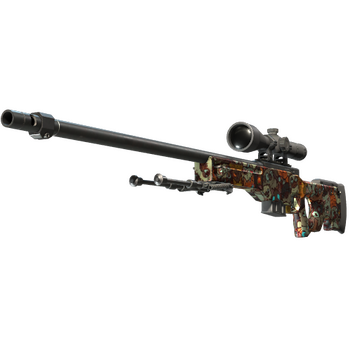
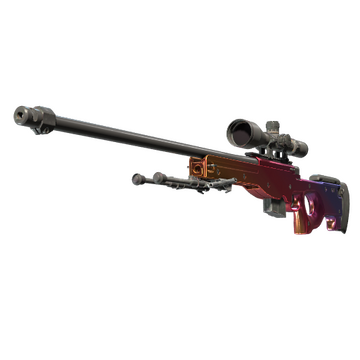
Players often look for interesting patterns for the AWP | PAW , AWP | Fade , and other skins that are less popular but still have intriguing pattern variations.
How to Check Skin Pattern in (CS:GO) CS2
To understand exactly which CS2 (CS:GO) skin pattern you are dealing with, it’s not enough to just look at the skin name or its wear. The pattern is a separate parameter that needs to be checked both visually and technically.
The simplest way is the in-game inspect. Here, you see the actual texture layout: where the drawing sits, which colors dominate, whether there is symmetry or clean zones, and if you hover over the information icon at the bottom, it will show you your pattern index.
There are also special websites that can help you check the pattern not just for one skin, but for all CS2 (CS:GO) skins you own, and determine the total value of your inventory. It often happens that you think your inventory is worth a maximum of 100 or 200 dollars, but you might not even know you possess a rare pattern. So, these sites can help you identify not only the pattern but the overall value of your inventory.
Tips for Identifying Valuable CS2 Skin Patterns
There’s a lot of information to take in at once, so we’ve put together a quick checklist to keep in mind for the future.
When you are evaluating a new addition to your inventory, don’t just look at the skin name or the wear rating. Make sure to inspect the pattern template as well, because rare patterns can be quite valuable even if the condition isn’t perfect.
If you aren’t sure if a pattern is rare, the first thing you can do is evaluate the key visual zones: check how the center of the model, the sights, or the top of the barrel looks, since these are the spots players see most often. Also, pay attention to community terms like “Full Fade,” “Clean Web,” or “Balanced Pattern” – they might be unofficial, but they heavily influence the market.
And most importantly: even a rare pattern doesn’t always guarantee an easy flip. Always consider liquidity and actual buyer interest, rather than just a nice screenshot. And if you decide to sell your skin, make sure to choose the best CS2 marketplace so you don’t lose a single cent on the sale.
Conclusion
CS2 (CS:GO) skin patterns are a complex topic, and you have definitely realized by now that this isn’t a minor detail, but a major factor that defines a skin’s look and value. Two identical items with the same wear can look completely different just because of a different Pattern ID. For players, it’s a question of aesthetics, for collectors, it’s about rarity, and for traders, it’s all about liquidity. It is important to remember that not every “rare” pattern is automatically expensive. Community demand dictates everything.
Therefore, always inspect the pattern manually, evaluate it visually, and don’t rely solely on the name or rumors. A smart approach to patterns will help you avoid mistakes and navigate the CS2 market with confidence.
FAQ
Simply put, a CS2 pattern is how the skin's texture is applied to the weapon model. It is defined by a number called the paint seed (or pattern ID), which determines the exact placement of colors, scratches, lines, or symbols on the gun.
There is no single "best" pattern. For Case Hardened skins, it might be a Blue Gem, for Fades, a 100% Fade, and for Crimson Webs, large symmetrical webbing. Ultimately, the "best" patterns are decided by the community and market demand, since it's all subjective.
Players can't create or manually change patterns. The pattern is automatically generated the moment a skin drops, is unboxed from a case, or crafted in a trade-up contract.
The rarest ones are those recognized by the community, such as specific Blue Gem seeds or perfect Fade percentages. Valve doesn't officially classify any specific pattern as "rare."
You can check the pattern by inspecting the item in your inventory and looking for the paint seed number, or by checking the item's inspect link.
You can't. Patterns aren't applied manually – they are already "baked in" to the skin the moment it is created.
A pattern can drastically raise or lower the price, even if the wear is identical. On high-tier skins, the price difference between a standard pattern and a desirable one can be massive.
No. The pattern is permanently locked to the skin and never changes with updates or wear.
Yes. Float and pattern are independent stats. Two skins with the exact same wear value can look completely different.
No. The entire hierarchy of "rare" patterns is based on community consensus, market trends, and visual appeal.

Be the first to share your thoughts.